Ojé (Ficus insipida)
About the plant
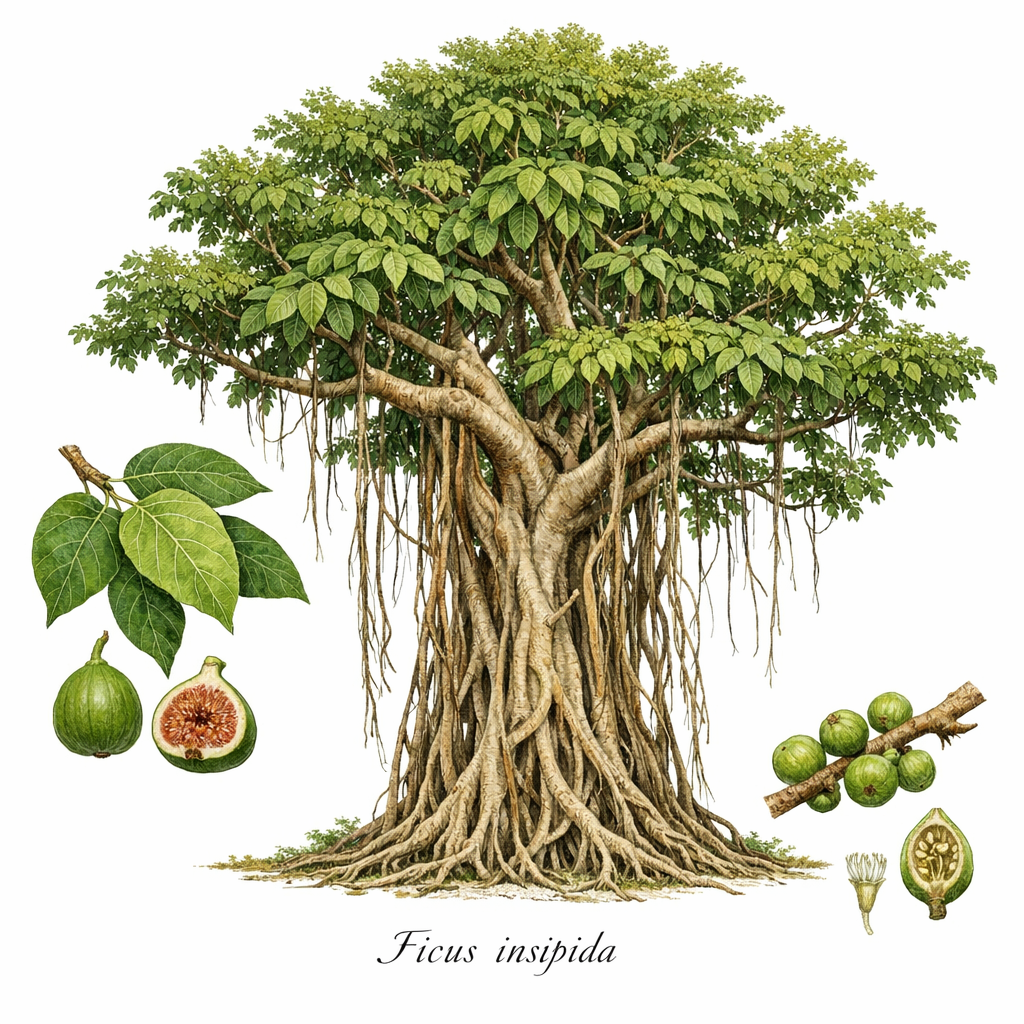
Ojé (Ficus insipida) is a large tree in the fig genus (Moraceae), tropical Americas. When the bark is damaged it exudes milky latex. Local name ojé. The latex contains ficin — a proteolytic enzyme that dissolves the coverings of intestinal parasites; traditionally used as a purgative and antiparasitic by the Shipibo and other Amazonian peoples.
Properties and use
Besides expelling parasites and cleansing the digestive tract, the latex is used for rheumatism, leishmaniasis, snake and ant bites, toothache, 'blood cleansing'; leaves for fever and anemia. In dieta ojé is one of the most recognizable purgatives: deep cleansing, during which, in ethnographic accounts, the 'mother' of ojé may appear as a young woman comforting and calming. Practitioners choose varieties of ojé for the task.
Use in dietas
Dieta with ojé is a powerful cleansing line. The aim is both practical and symbolic: expulsion of parasites, cleansing of intestine and 'blood', return of vitality. The experience can be harsh: strong vomiting and weakness. Dose and duration are set only by the maestro; overdose is dangerous — severe intoxication and even deaths have been documented (especially with excess dose or in children). Idiosyncratic reactions are possible even at recommended doses.
Precautions
Ficus insipida latex in overdose causes severe intoxication; cerebral edema is possible. In Peru over 12 years dozens of hospitalizations for toxic reactions were recorded; mortality is estimated at about 0.01–0.015%. Even at the recommended dose (about 1 cm³/kg) some may have idiosyncratic reactions. Children are at risk. Use only under an experienced maestro; do not exceed the dose.