Bobinsana (Calliandra angustifolia)
About the plant
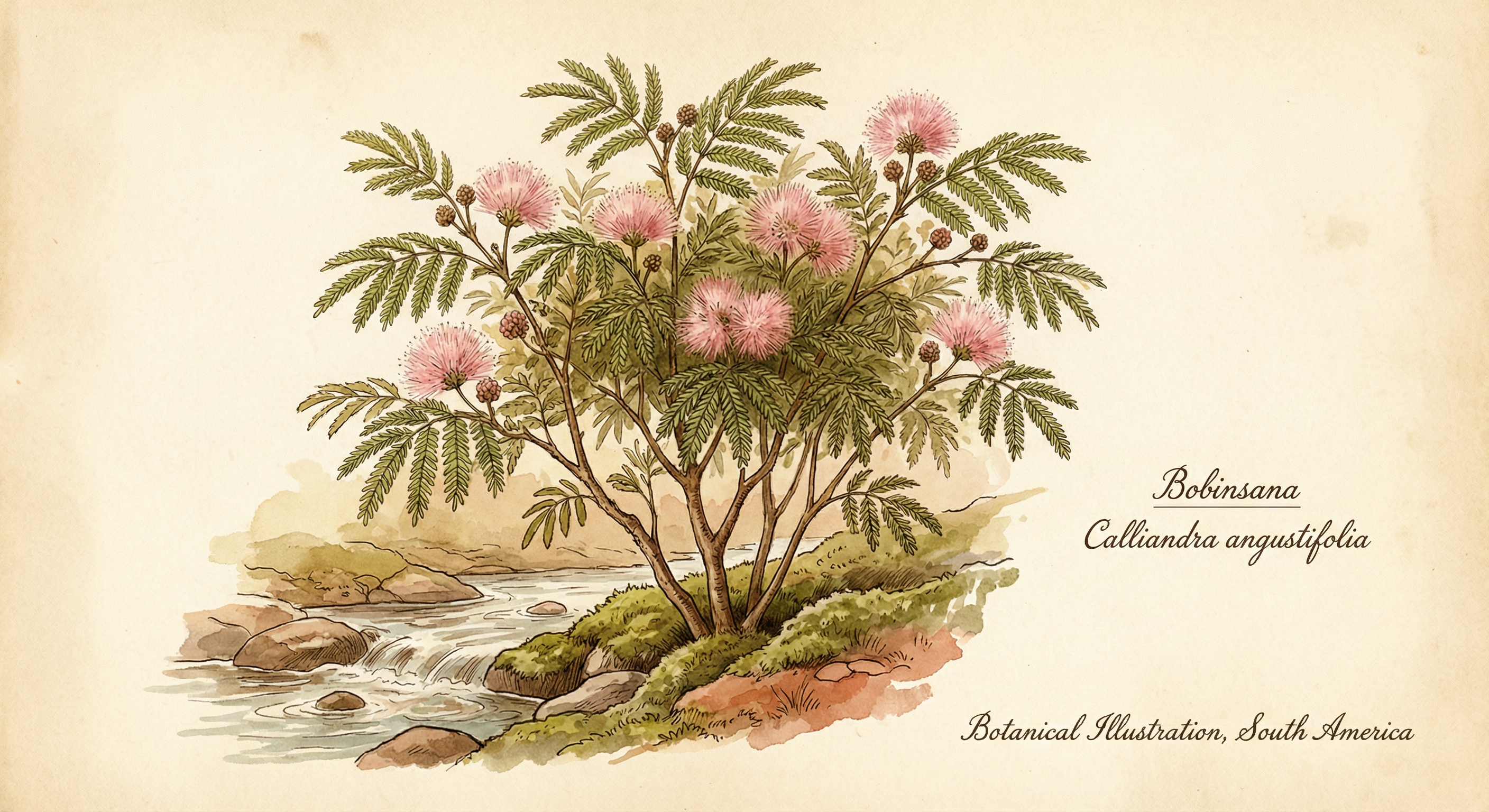
Bobinsana (Calliandra angustifolia) is a small riparian tree in the legume family (Fabaceae) growing along Amazonian rivers. Height 4–6 m; flowers pink to reddish, powderpuff-like, typical of mimosa subfamily. Range from southeastern Colombia to northeastern Bolivia and northern Brazil; especially abundant along the Huallaga and Mayo rivers in eastern Peru, also in cloud forests and warm Andean valleys up to 1500 m. Produces resinous gum. Other names: bobensana, kuanti, quinilla blanca, etc.
Properties and use
Bobinsana bark is used by indigenous peoples (including Shipibo-Conibo) in tinctures for rheumatism, arthritis, colds, uterine disorders, edema. The plant is not hallucinogenic on its own; it is added to ayahuasca as a 'teacher' and dieted separately. Bobinsana is called the plant of heart and dreams: it opens emotional pathways and enhances dreaming and connection with the subconscious.
Use in dietas
Bobinsana dieta is often recommended as a first master-plant dieta: the plant is gentle but deep. It helps work through grief, loss, betrayal, heartbreak, and trauma — not by suppressing but by opening and dissolving blockages. Dreams intensify, including lucid ones; many report a clear link between dreams and waking life. Outcomes are associated with compassion, empathy, intuition, grounding, and a sense of peace.
Restrictions are standard: no salt, sugar, alcohol, caffeine, red meat, pork, dairy, citrus, garlic, or onion; solitude, abstinence, regular intake of the plant. Bobinsana does not demand the same 'fiery' purge as mapacho or ojé, but the depth of emotional work can be substantial.
Precautions
Bobinsana at traditional doses is considered safe; contraindications are standard for dietas (pregnancy, severe conditions). As with any dieta, it should be undertaken under a knowledgeable maestro.