
Introduction to Shipibo Tradition
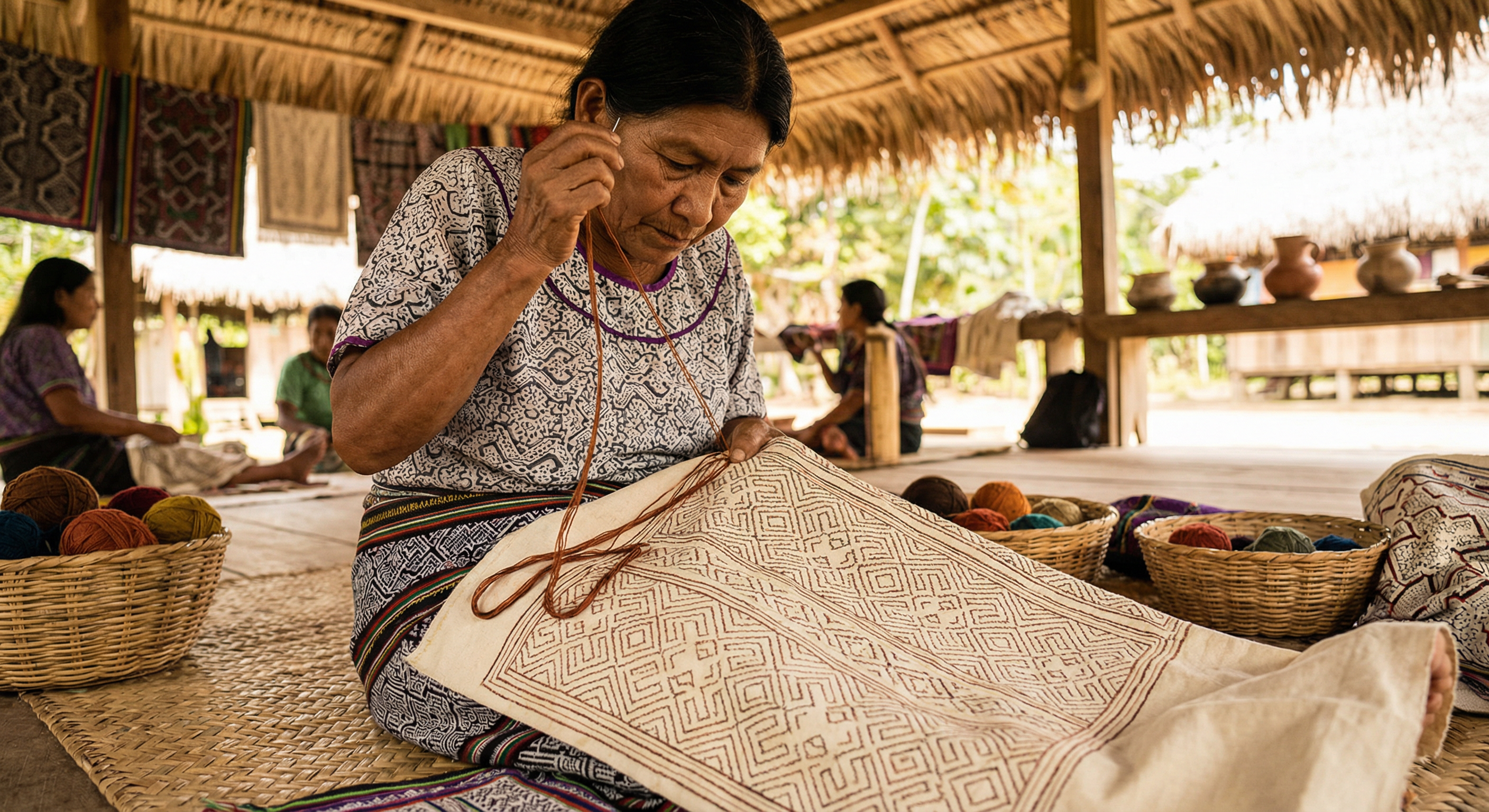
The Shipibo-Conibo people are the indigenous population of Peru, known for their rich shamanic tradition and healing ceremonies with ayahuasca. Plants are endowed with spirits and consciousness; Shipibo shamans (onaya) conduct dieta retreats (soma) to communicate with plant spirits and receive healing songs – icaros.
Ayahuasca
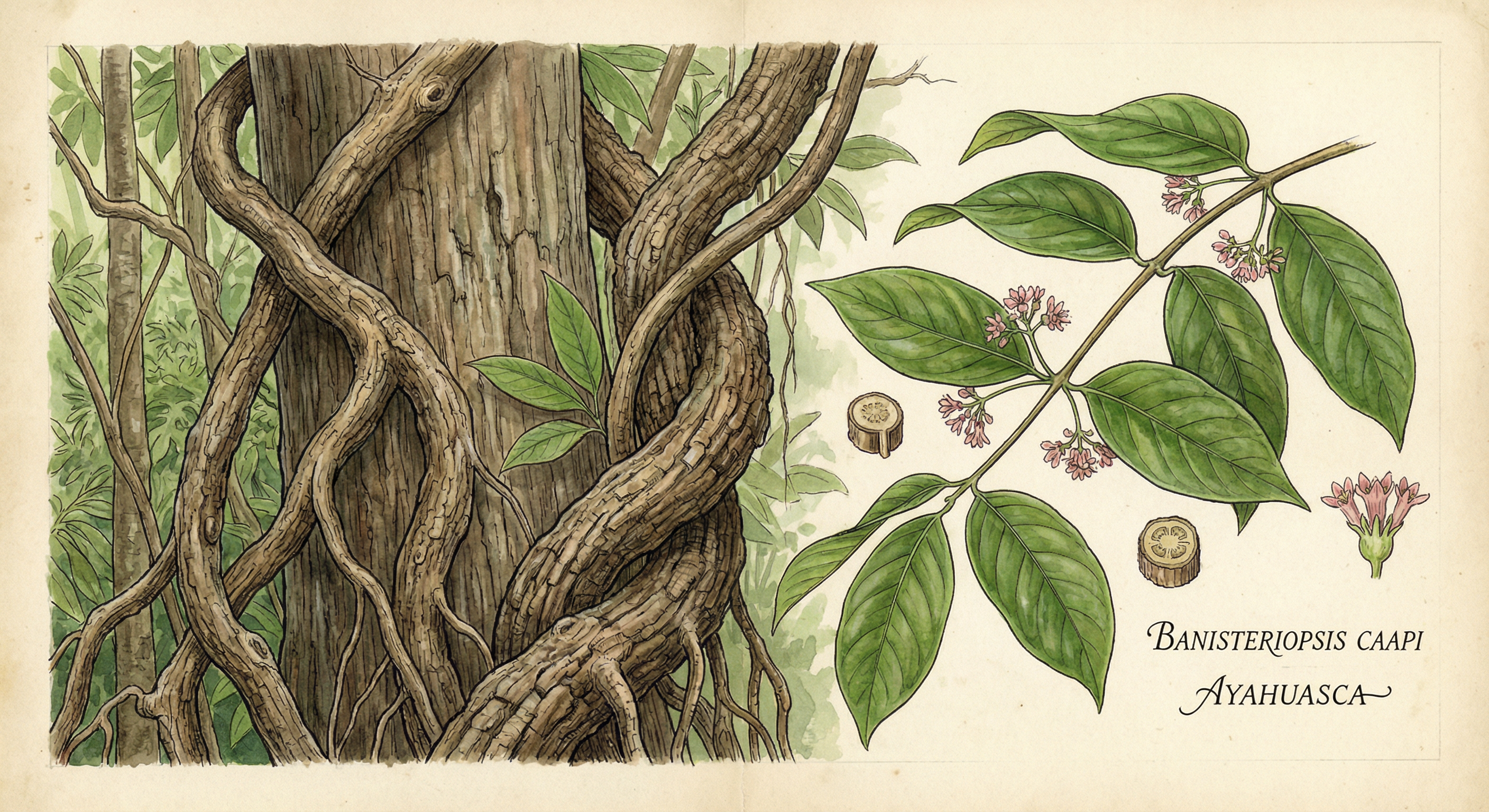
Sacred brew from the vine Banisteriopsis caapi with DMT-containing leaves. Ayahuasca is the central element of Shipibo shamanism: healing ceremonies are held at night under the guidance of an experienced healer who sings icaros and directs the energy. Ceremony preparation includes a strict diet and restrictions.
Plant Teacher Dieta

Sacred practice: the seeker spends time in seclusion, following a strict diet and daily taking an infusion of the chosen plant teacher. The goal is to establish a deep connection with the plant spirit, receive knowledge and healing from it. Dieta is opened and closed ceremonially by the maestro.
Icaros
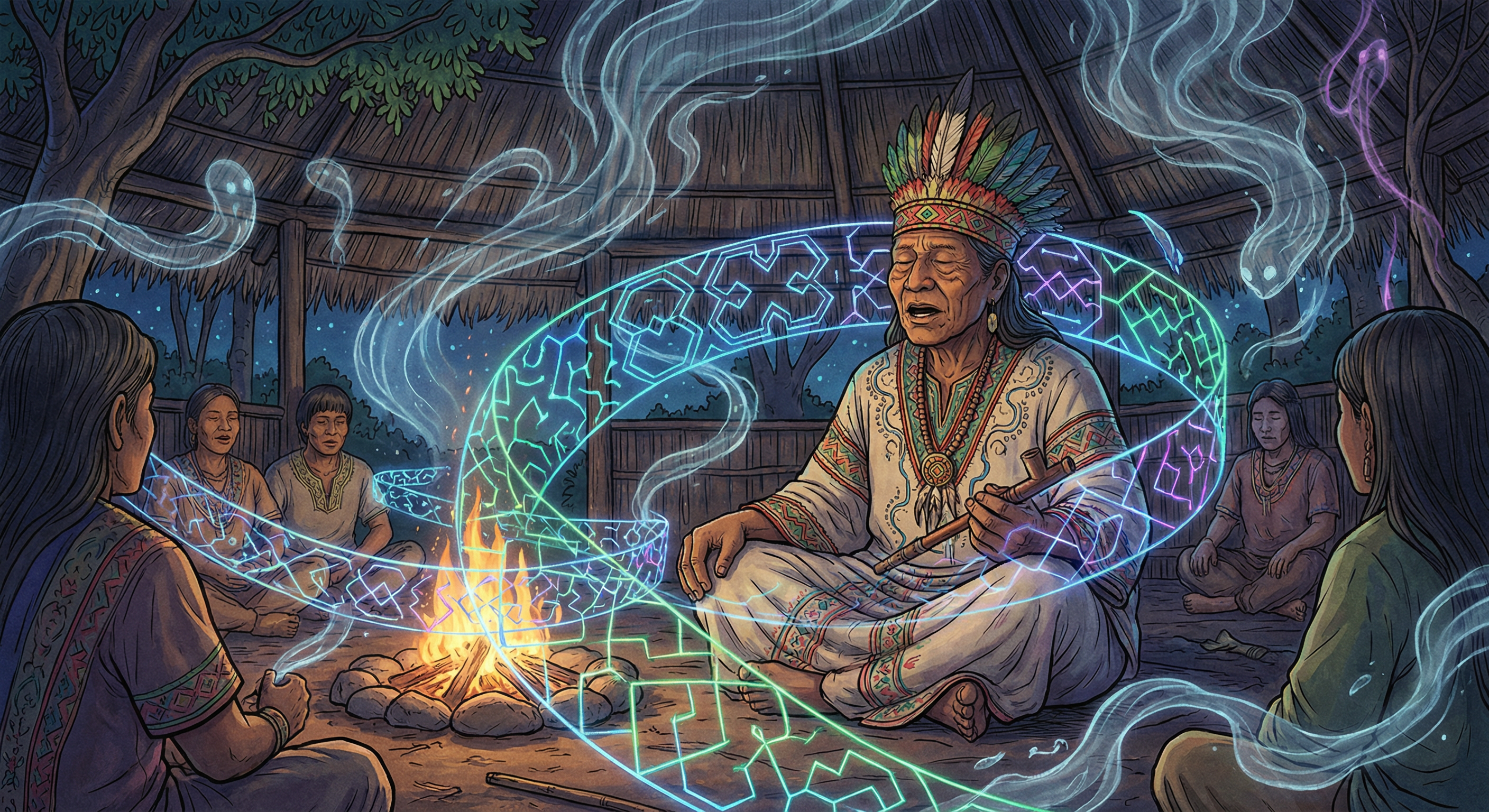
Healing songs through which shamans interact with plant spirits and heal patients. Icaro is a multidimensional 'sound pattern' woven into a person's energetic field. Shipibo say that each kené geometric ornament can be 'sung' – patterns and icaros are inextricably linked.
Kené Patterns

Geometric patterns with which Shipibo decorate fabrics, clothing and vessels – not just decoration, but a reflection of cosmology and healing knowledge. Patterns are given by plants and spirits; each carries intention – healing, protection, love. Kené ornaments and icaros are linked: a pattern can be 'read' and 'sung'.
Plant Teachers
Special species of trees and herbs of the Amazon that Shipibo form alliances with through dieta. The catalog lists 25 plants with descriptions.
'Plants hold for us the keys to the ancient wisdom of nature', and by opening our hearts to them, we gain not only healing, but also a new vision of ourselves and the world.